
Co-organised with KADIST,Frequencies of Tradition at Guangdong Times Museum upends static notions of tradition, with works by 19 artists, researchers, and filmmakers uncovering histories and futures that charge evolving trajectories.
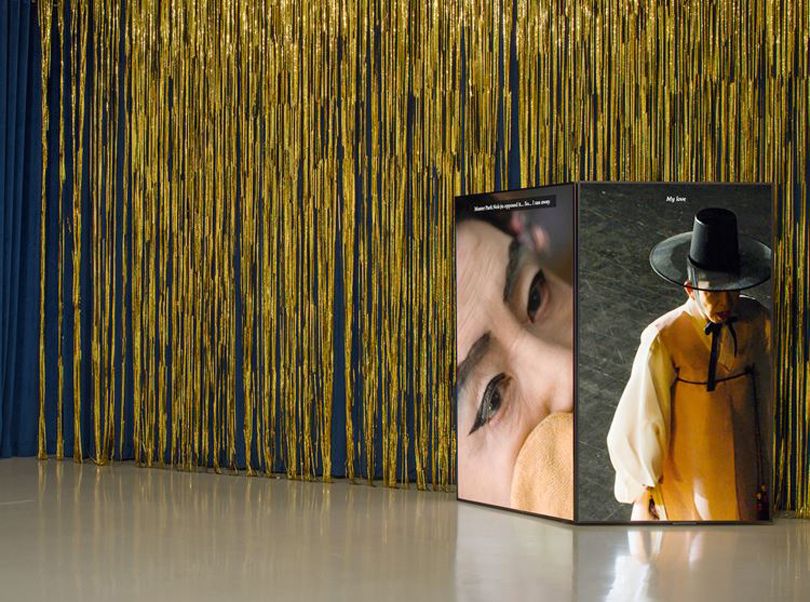
siren eun young jung, 〈A Performing by Flash〉, Afterimage, Velocity, and Noise (2019). Exhibition view: 《Frequencies of Tradition》, Guangdong Times Museum, Guangzhou (12 December 2020–7 February 2021). Courtesy Guangdong Times Museum. Photo: Luo Xianglin. Image Provided by Ocula
Take Ming Wong's sci-fi inflected 〈Tales of the Bamboo Spaceship〉 (2019). The single-channel video opens with a tale of Shaolin monks joining opera troupes along the Pearl River Delta after Qing authorities destroyed their Southern temple: a history of solidarity and resistance between communities that was mythologised by kung fu movies in Hong Kong and Taiwan and stretches from the 17th century to now.
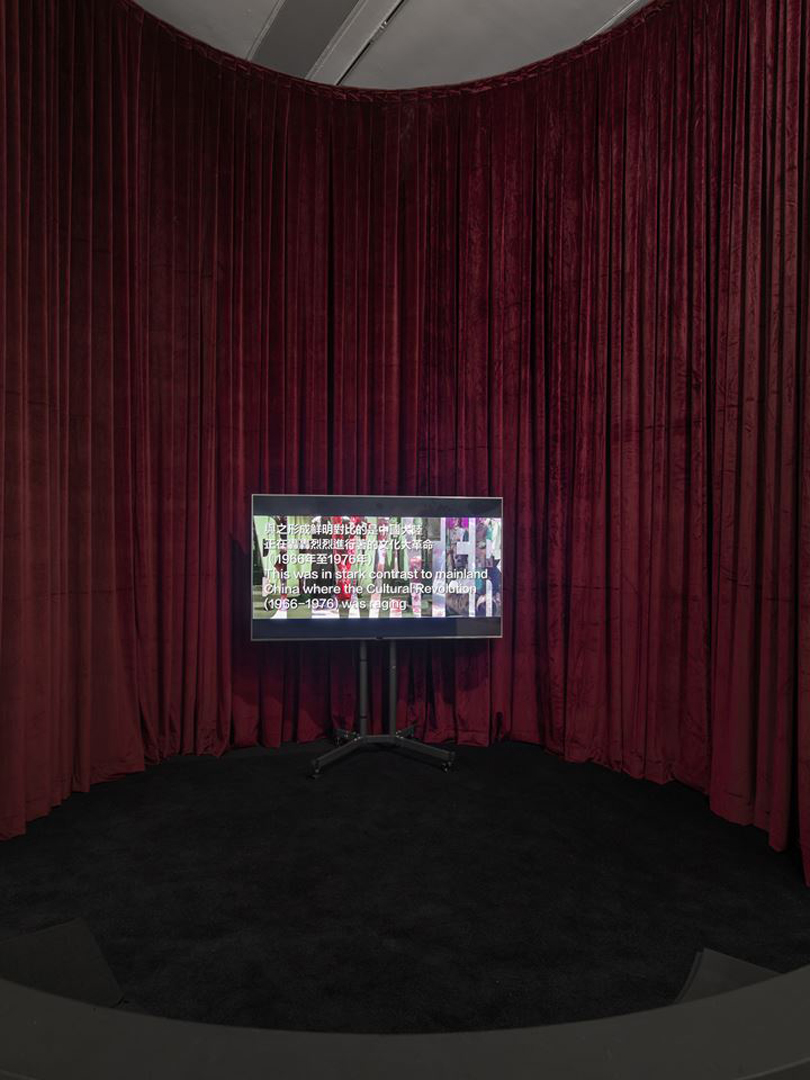
Ming Wong, 〈Tales of the Bamboo Spaceship〉 (2019). Exhibition view: 《Frequencies of Tradition》, Guangdong Times Museum, Guangzhou (12 December 2020–7 February 2021). Courtesy Guangdong Times Museum. Photo: Luo Xianglin. Image Provided by Ocula
Across the show, compelling remixes re-frame concepts of culture and custom as multi-dimensional and intertwined. In the case of 〈The Heart's Desire〉 (2020), a collaboration with Stella and Roger Nelson, Simon Soon makes pixelated animated GIFs out of archival imagery, including photographs of Cambodian ballet, erotic illustrations for traditional Malay syair poetry manuscripts, and props from 1950s performances depicting an uprising of Chinese plantation labourers in Sumatra.
Curated by Hyunjin Kim, KADIST's lead regional curator for Asia, the exhibition interprets 'tradition as an enchanting liminal space that complicates and pluralises our understanding of the regional modern.' That liminality is embodied in works portraying historical figures as both medium and filter through which customs pass and inevitably evolve. Hwayeon Nam's multi-channel video installation 〈Dancer from the Peninsula〉 (2019), for example, traces the life of choreographer and dancer Choi Seung-hee. Also known by her Japanese name Sai Shoki, Choi travelled across Europe, North America, Latin America, and—after Japan entered World War II in 1941—China, where she performed for Japanese soldiers, and North Korea, where she defected in 1946.
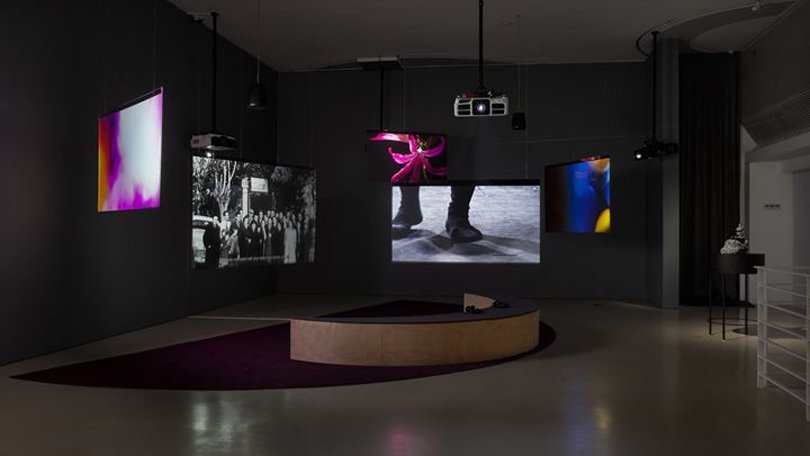
Hwayeon Nam, 〈Dancer from the Peninsula〉 (2019). Exhibition view: 《Frequencies of Tradition》, Guangdong Times Museum, Guangzhou (12 December 2020–7 February 2021). Courtesy Guangdong Times Museum. Photo: Luo Xianglin. Image Provided by Ocula
※ This article was originally published in OCULA, and reposted under authority of OCULA.
※ Click to Read Full Article: https://ocula.com/magazine/insights/kadist-brings-tradition-to-life-in-guangdong/
Related Article
History Has Failed Us, But No Matter – If History is unjust, change it

Stephanie Bailey
-

-
 Review / Features - 31 May 2017
“2 or 3 Tigers”: Asian new media artists at Berlin’s Haus der Kulturen der Welt

