People / Interview
South Korean Artist Minouk Lim Talks About Her Creative Practice And Being Part Of Para Site's "Curtain"
posted 31 May 2021
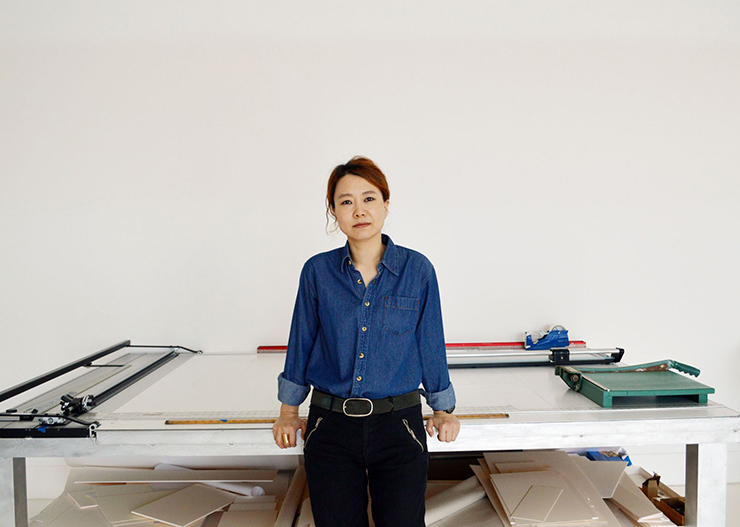
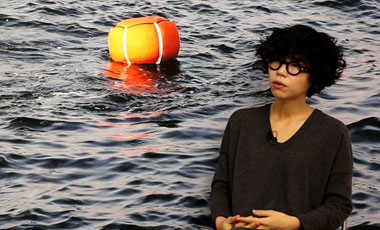
Korean artist Minouk Lim talks to Tatler about her creative practice and being part of Para Site's "Curtain" exhibition (Photo: Courtesy of the artist and Tina Kim Gallery)
The Korean artist talks to Tatler about her expansive creative practice, her identity crisis and her work, Antigone being part of Para Site's upcoming exhibition
It seems impossible to define Minouk Lim and her creative practice in just one word. The Korean artist tackles many forms, creating artworks that push the boundaries of different genres and media, never resorting to just one medium.
But her work seems close to her heart: recalling historic losses, ruptures, and repressed trauma. Rather than just replaying these events, she elevates the experiences, memories and feelings through imaging or engaging her own creation as non-human witnesses. Just like her own approach to art, when one looks at her work, it's a mix of emotions that range from anger, resentment to passion.
Lim's lone work, Antigone is part of Para Site's upcoming exhibition on May 15. Titled "Curtain", the exhibition features 23 other artists such as Xyza Cruz Bacani and Wu Jiaru. In this exclusive interview with Tatler , Lim talks about her creative practice, identity crisis as an artist and how she was introduced to Hong Kong.
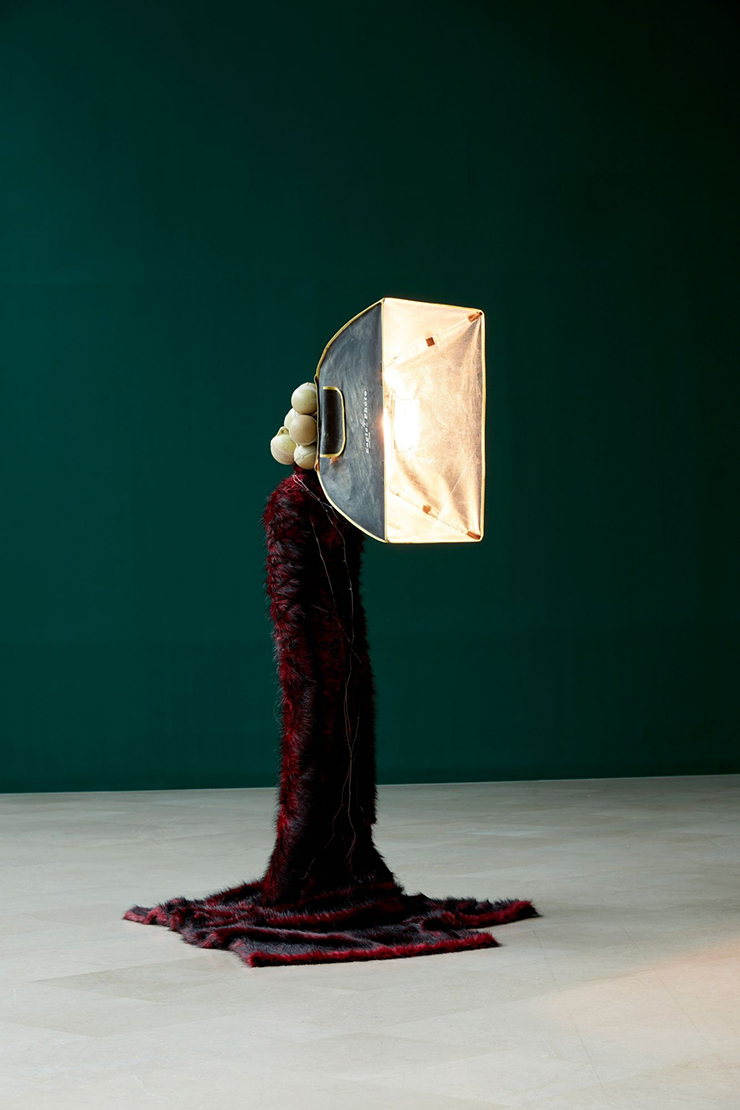
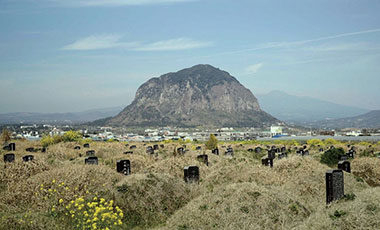
"Antigone" (2015) (Photo: Courtesy of the artist and Tina Kim Gallery).
Can you tell us about Antigone, the work you’re presenting at Para Site's 《Curtain》 exhibition?
This work asks questions about the coexistence of things that exist on behalf of others in other people’s places. It was previously shown at my solo exhibition, 《The Promise of If》 (Plateau, 2015) in Seoul and a partially modified version will be exhibited in Hong Kong for the first time.
The work was inspired by various objects that were shown during the live broadcast of Finding Dispersed Families on KBS (Korea Broadcasting System) in South Korea in 1983. At that time, family members who were eager to find their lost loved ones created signs and gathered representative objects to show on television. Countless people gathered at the broadcasting studio to find their family members lost involuntarily during the war, and it was hoped these items would help identify both the missing and the family members who searched for them.
It’s interesting how you take inspiration from a significant time in Korea’s history but also get the name from Greek mythology, was this a conscious decision to merge the two?
They say one of the meanings behind the name, "Antigone", is "one who walks against." Just like when I collect material for the work, I try not to realize and recreate the images in my head. At that moment, I'm influenced by certain linguistic structures that have paradoxical relationships and the titles also reflect that process. I believe that in Korea, the act of giving a title to something forms people's thoughts and culture, which reveals a kind of temporal space shaped by the country’s dramatically rapid modernization.
For example, the name of the apartment building where I live now is "Lotte Castle Arte". I think it means that "Lotte", from [the novel by Johann Wolfgang von Goethe], The Sorrows of Young Werther lives in a castle, and that is art. Rather than simply accepting this jumbled world before me, I want to separate, fragment and retell it through my work.
On the other hand, I wonder, "is this composite view the only creative alternative against being dominated by things determined by others"? The Korean War, Greek mythology, storefront mannequins, and pain—which feature non-equivalence and non-interactive material—all of which have influenced me in different ways and to different degrees. With the title, I wanted to show how these various elements relate to me in their own ways.
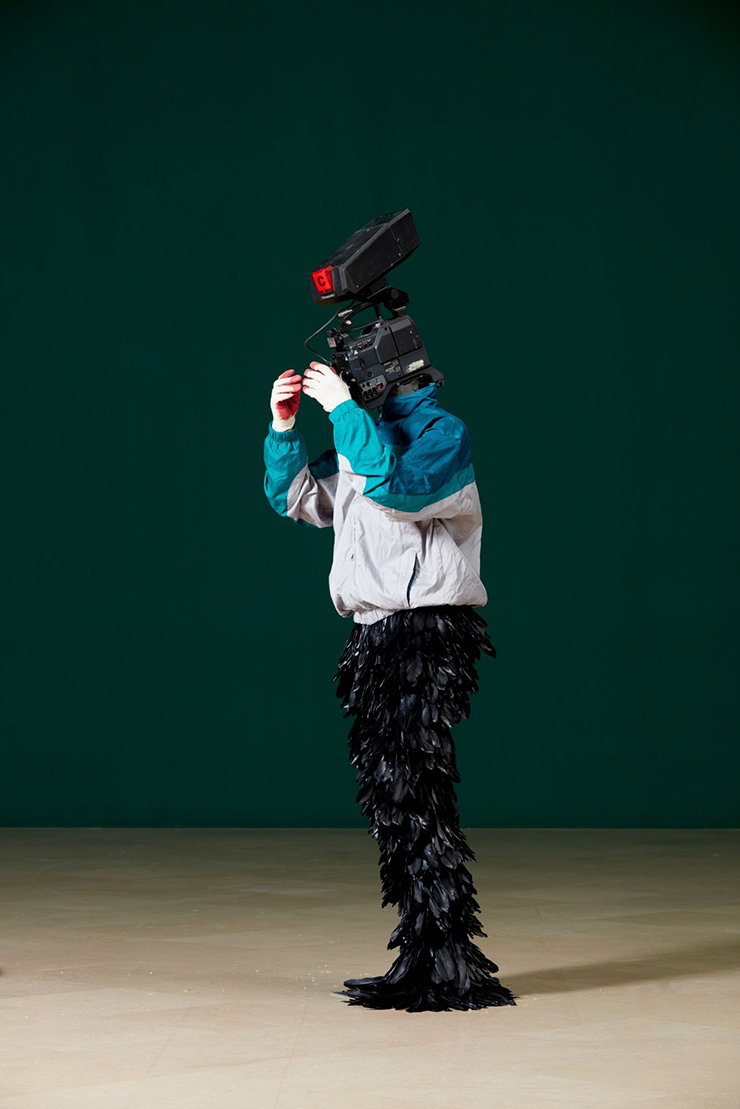
"L’homme à la caméra" (2015) (Photo: Sangtae Kim)
Your creative practice has always been influenced by the past and merging that into the future, why do you choose to bridge the two?
It's to contemplate the things I feel, explore what is absent and resist being forgotten. Although at times, one must forget in order to live. This is why artificial intelligence today is accelerating the age of automation by encouraging us to forget for the sake of convenience. However, this new digital culture ironically seems to politicise everything and enforce ethical scrutiny.
During these uncertain times, where illogical decisions and disasters have become everyday occurrences, I want to search for new directions in technological development and contemplate the significance of collective time as a way to move forward with my work. This means not being limited by my own experiences and understanding but instead achieving a broader view, rather than relying only on the experience and my own perspective.
※ This article was originally published on the Tatler Hong Kong website, and reposted under authority of Tatler Hong Kong.
※ Click to Read the full interview on Tatler Hong Kong's website: https://hk.asiatatler.com/life/korean-artist-minouk-lim-interview
Jianne Soriano
Jianne is a Hong Kong-born, raised and based Filipino who also spent a few years in the Philippines and Japan. She has a passion for storytelling, covering art and culture, entertainment, beauty, fashion, dining and travel. When she's not writing, you can find her watching Korean dramas, listening to BTS, visiting art exhibitions or learning another language. Follow her on Instagram.
-

-
 Interview / People - 03 Jan 2017
Jun Sojung

